 University of North Texas


 The need for mental health care is growing. North Texas faces an increasing need for
well-trained behavioral health professionals. But in many North Texas communities,
especially rural counties, there are too few qualified professionals to meet demand,
and patients wait longer for care.
The University of North Texas is working to change that.
Through its North Texas Behavioral Health Careers Opportunity Program (HCOP) in psychology, UNT is taking on the critical shortage of mental health professionals across North Texas by investing in the next generation of providers — starting as early as high school.
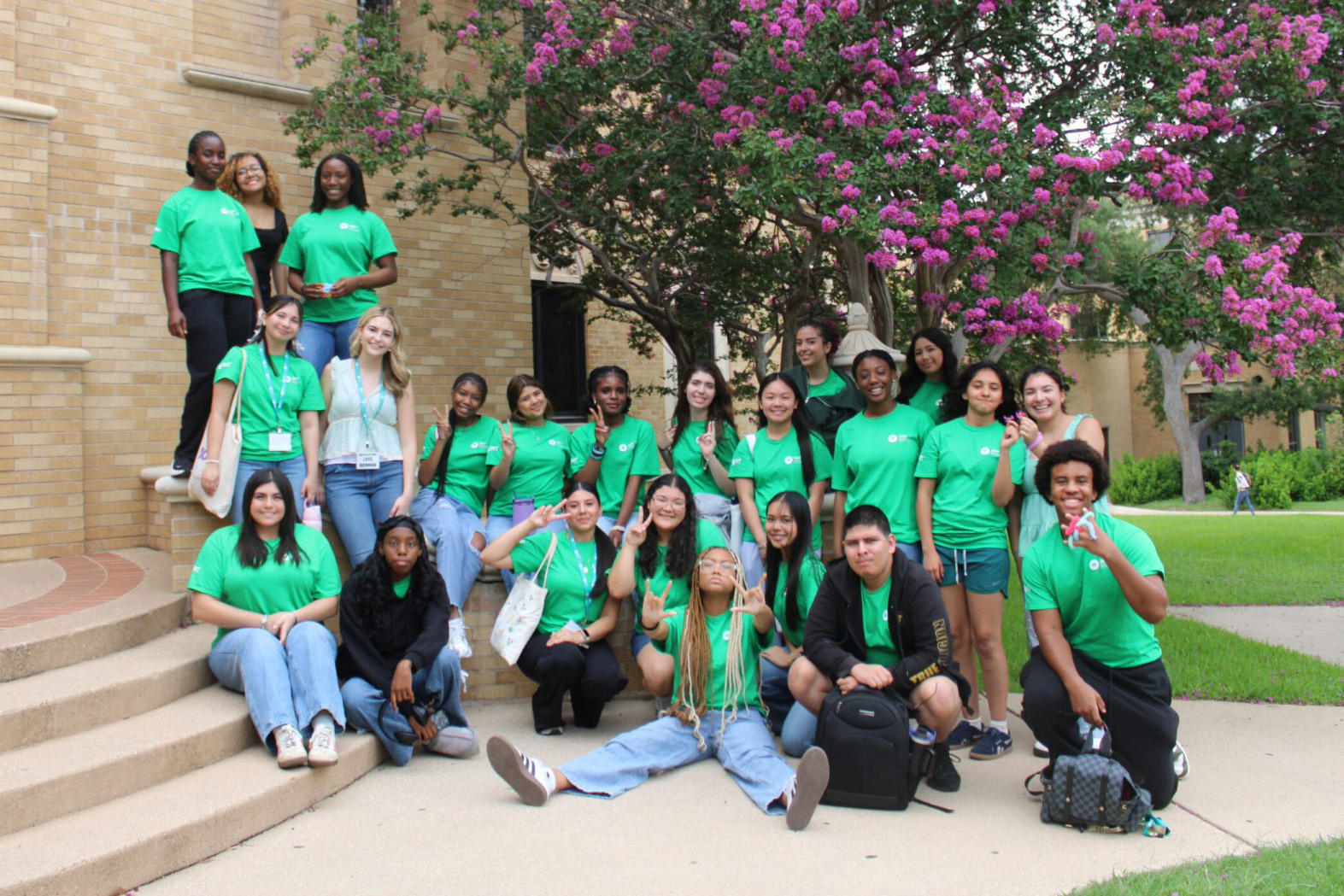
The HCOP program addresses this need by identifying talented students early and providing them with rigorous preparation for careers in behavioral health. The Summer Academy brings high school students to the UNT campus for an immersive experience that combines a challenging behavioral sciences curriculum with the development of essential professional and leadership skills.
That is just the beginning — HCOP isn't your typical summer enrichment program. Imagine being a rising high school junior or senior and spending six weeks studying neuroscience and psychotherapy, learning to recognize mental health crises, conducting research alongside university mentors and presenting your findings to professionals in the field. All of this while earning a stipend to do it.
Since 2024, HCOP has trained 131 students and awarded more than $413,500 in stipends and research support.
Through its emphasis on mentorship, the program is designed to multiply that investment, preparing each generation of students to help develop the next. Doctoral students mentor undergraduates and high school students on research teams, building the supervision skills they will use as licensed professionals.
This year, HCOP launched the inaugural online cohort that brings the program to undergraduate students in rural areas who live too far from UNT to attend on campus.
“A unique feature of the near-peer mentoring model is connecting participants with mentors at various stages of the educational pipeline, including high school, pre-matriculation, undergraduate, and doctoral levels,” said Maame Darkwa, Senior Program Project Coordinator. “Through this structure, students gain exposure to scientific research and work with real-world data to develop research projects, culminating in juried poster presentations showcased at the program's end-of-year banquet.”
Darkwa added: “The academy offers an engaging and interactive six weeks of learning while also equipping students with valuable certifications in Health Insurance Portability and Accountability Act (HIPAA) and Mental Health First Aid.”
A pipeline with a purpose
The impact of HCOP extends far beyond the students who participate.
Every high school student who discovers a passion for behavioral health, every undergraduate who gains the confidence to pursue graduate education and every doctoral student who moves closer to professional practice represents the possibility to expand access to mental health care.
For communities with too few providers, that potential matters. A shortage of qualified professionals can mean longer wait times for treatment, fewer options for care and greater barriers for people already struggling to access services.
“Most people think a psychology degree leads to one job, but it's the foundation for nearly every career in behavioral health sciences,” said Dr. Kim Kelly, project director of HCOP. “The same training prepares students to work as behavioral health technicians and case managers with a bachelor's degree, as licensed counselors and therapists with a master's, and as psychologists with a doctorate. HCOP builds that foundation early so students can see every path in front of them. HCOP identifies talented students early and gives them rigorous preparation across the areas necessary for any behavioral health career.”
HCOP is funded by the Health Resources and Services Administration (HRSA) within the U.S. Department of Health and Human Services*. Participants are selected through a competitive application and must meet the federal program’s eligibility requirements, which are based on family income and educational background.
Applications for the 2027 HCOP Academy open October 1, 2026, and close on February 28, 2027. Program details and applications for all program levels are available at UNT HCOP – Health Careers Opportunity Program.
*The Health Resources and Services Administration (HRSA), Department of Health and Human Services (HHS) provided financial support for this project. The award provided 100% of total costs and totaled $3,243,197. The contents are those of the author. They may not reflect the policies of HRSA, HHS, or the U.S. Government.