 University of North Texas


Behavior Analysis (MS)
Are you interested in how environment affects behavior?
UNT’s innovative Behavior Analysis master’s degree gives you a broad and deep education in Behavior Analysis, including: knowledge of principles, theory and research methods of applied behavior analysis and the experimental analysis of behavior; principles and procedures for systematic application of behavioral technology in natural environments; and, practical experience in diverse areas such as neuro-operant interventions, functional analysis, early autism intervention, animal welfare, college teaching and social justice.
Our Master's degree program in Behavior Analysis is accredited by the Association for Behavior Analysis International Accreditation Board and was the first in the United states to earn accreditation. The MS program meets the BACB's Pathway 1 requirements.
BCBA Certification
The M.S. in Behavior Analysis program offers a curriculum that fulfills the course requirements for those seeking Board Certified Behavior Analyst (BCBA) certification. The M.S. curriculum features behavior-analytic coursework, research training, and practical experiences under the guidance of our faculty, who collectively possess a broad spectrum of expertise in the field of behavior analysis. Thus, graduates are equipped with the essential knowledge and skills for BCBA certification.
In addition to coursework, students aiming for BCBA certification are also required to obtain fieldwork hours. A full description of eligibility BCBA requirements can be found on the BACB website. Our graduate advisor helps assist students in securing fieldwork experiences through faculty-supervised experiences, as available, and with community partners. However, it's important to note that our program does not require students to acquire or complete this supervised fieldwork as part of their degree.
Disclaimer Regarding Licensure Laws
Many states currently require licensure to practice behavior analysis. In the state of Texas, certification as a Board Certified Behavior Analysis is required for licensure which is regulated by the Texas Department of Licensing and Regulation. However, laws and regulations are changing rapidly and vary from state to state, so interested individuals should contact the licensing board in their state. In addition, students can visit the BACB’s website to find a list of states that currently require licensure, the year the licensure law was enacted, and the state’s licensure board and professional association. Each student is responsible for determining the requirements to practice ABA in the state in which they wish to practice.
Many states currently require licensure to practice behavior analysis. In the state of Texas, certification as a Board Certified Behavior Analysis is required for licensure which is regulated by the Texas Department of Licensing and Regulation. However, laws and regulations are changing rapidly and vary from state to state, so interested individuals should contact the licensing board in their state. In addition, students can visit the BACB’s website to find a list of states that currently require licensure, the year the licensure law was enacted, and the state’s licensure board and professional association. Each student is responsible for determining the requirements to practice ABA in the state in which they wish to practice.
Overview

The Master's of Science in Behavior Analysis is offered through the Department of
Behavior Analysis housed in the College of Public Affairs and Health Sciences. We
are very proud of our M.S. program which was the first graduate program in the nation
to be accredited by the Association for Behavior Analysis International Accreditation Board. We are able to offer what is recognized worldwide as the most extensive training
available in behavior analysis at the master’s degree level.
In addition to a world-class faculty and a wide range of departmental projects available to students, an array of resources necessary to ensure student success are also available at UNT including a well-stocked library system, computer labs, student health-care, and state-of-the-art workout facilities. The department also makes available computers, printers, and some shared office space to allow students to work on departmental lab and clinic projects on site
In addition to a world-class faculty and a wide range of departmental projects available to students, an array of resources necessary to ensure student success are also available at UNT including a well-stocked library system, computer labs, student health-care, and state-of-the-art workout facilities. The department also makes available computers, printers, and some shared office space to allow students to work on departmental lab and clinic projects on site
Mission Statement
The mission of the Department of Behavior Analysis (DBA) is to provide a program of learning opportunities for graduate and undergraduate students that is nationally recognized for excellence and that establishes knowledge and skills that allow graduates to compete successfully in the job market and make significant contributions to society; to contribute to the discipline of behavior analysis and to the community by conducting applied and basic research that furthers understanding of human behavior and results in demonstrable positive behavior change; to form lasting partnerships in the DFW metroplex, nationally, and internationally; and to develop behavioral solutions for social problems at local, national, and international levels.
The goal of the DBA, as related to the M.S. degree program in Behavior Analysis at UNT, is to graduate master’s-level behavior analysts. Graduates of the M.S. degree in Behavior Analysis are educated, fluent, informed, ethical, and skilled in the science of behavior. Graduates understand: (1) that behavior analysis is a natural science; (2) the universality of a behavior-analytic approach to behavior change; (3) the importance of the science of behavior to serve and improve humankind and animal welfare; (4) the interconnected systems in which behavior exists; and (5) that behavior change occurs in government, industry, educational institutions, communities, families, and across the DFW metroplex, national, and international settings.
Graduates with an M.S. degree in Behavior Analysis from DBA apply the principles of the science of behavior in ways that improve human and non-human conditions as demonstrated in the design, implementation, and evaluation of conceptually systematic and effective behavior change programs that take into consideration the interconnected systems. Graduates make significant contributions to the discipline and society, and they understand the importance and value of their work as related to short- and long-term outcomes. They conduct basic and applied research in a diversity of settings that furthers the understanding of behavior. Their application of the science results in demonstrable and positive behavior change. Students graduate with generative repertoires that allow them to compete successfully in the job market and/or post-graduate degree programs.
Application Process
Application Process
- A completed application for admission to the University of North Texas:
- Apply at GradCAS
- Select Behavior Analysis, MS as your major
- Payment of non-refundable application fee of $75.00 for U.S. residents
- The GRE is not required
- Official transcripts from all colleges/universities attended sent directly to UNT
- Using priority shipping or having official transcripts sent electronically will expedite application processing
- Submit transcripts via US Mail to:
University of North Texas
1155 Union Circle #311277
Denton, TX 76203-5017
1155 Union Circle #311277
Denton, TX 76203-5017
-
- Submit transcripts electronically via the GradCAS online portal
- Transcripts must come directly from the prior college/university; cannot be sent by applicant
- All international applicants must show proof of English language proficiency
The following supplemental materials can also be submitted via the GradCAS online portal.
- A personal statement that outlines your personal experiences, your goals, your interests in behavior analysis, and why you want to attend the graduate program at UNT. Please note that students are admitted as a cohort to the M.S. in Behavior Analysis program instead of to a particular faculty member or research lab. If you do have interests in working with a faculty member or research lab/site, please share that information in your statement as well.
- Contact information for recommendations from professionals in your discipline (BCBAs,
academicians, employers) who can comment on your work habits and your ability to successfully
complete graduate-level work. At least one recommendation from an academic source
is preferred.
- Please submit three names and e-mails for three references in your GradCAS application.
- We will contact your references with a form to complete as well as a way to submit their letter of recommendation
- Please do not submit, or have your references submit, letters of recommendation directly to us via email.
- We also require that all applicants to the master’s program have completed at least
two behavior analysis courses as prerequisites prior to beginning the program of study
in the Fall.
- While we require two courses in behavior analysis, a specific course is not required. Any course that is taught from a behavior-analytic perspective may count towards the requirement (e.g., Psychology of Learning; Introduction to Applied Behavior Analysis, etc...).
- Students without these prerequisites may still apply for admission into the graduate program. We offer one “leveling” course (offered online in the summer semester) that fulfills our prerequisite requirement that can be completed prior to beginning the program in the Fall.
- If you would like an undergraduate course or courses to be evaluated, please submit a Word document providing the course name, number, and any other information you have about the course. We will follow up via email if we have further questions about the course(s).
To check on the status of your application, please first check the GradCAS portal. If you have additional questions regarding your application, send an email to GoGrad@unt.edu or behavior.analysis@unt.edu.
Other Info and Online Application
The department’s priority application deadline for Fall admission is January 15th. The department's final application deadline for Fall admission is March 1st. We do not have a Spring enrollment option. We look forward to receiving your application by the deadline.
Please feel free to contact us at behavior.analysis@unt.edu if you have any questions about our department, program, or the application process that are not answered in the sources listed here.
Tuition Costs
To determine how much it will cost to receive an M.S. in Behavior Analysis degree from the College of Public Affairs and Health Sciences, please visit the Financial Aid office website.
Financial assistance
Amounts vary each year, but the following financial assistance programs are available to help you pursue your education:
- Douglas P. Field Memorial Scholarship
- Grace of a Miracle Scholarship in Behavior Analysis
- Guy Bedient Memorial Scholarship in Applied Behavior Analysis
- Madonna Ludlum Memorial Scholarship
- Part-time employment in faculty-supervised projects (10 to 20 hours per week)
- Research assistantships (10 to 20 hours per week)
Information about scholarships, including department-specific scholarships, as well as information about other financial assistance programs is available at financialaid.unt.edu.
Scholarships & more
The Department of Behavior Analysis in UNT’s College of Public Affairs and Health Sciences offers scholarships to students each year, including:
- Donald L. Whaley Memorial Scholarship
- Douglas P. Field Scholarship for Graduate Student Research
- Grace of a Miracle Scholarship
- Behavior Analysis Graduate Fellowship
Social Media
- Department of Behavior Analysis at UNT Facebook
- Behavior Analysis Online Facebook
- Behavior Analysis Online on X
Your Academic Advisor
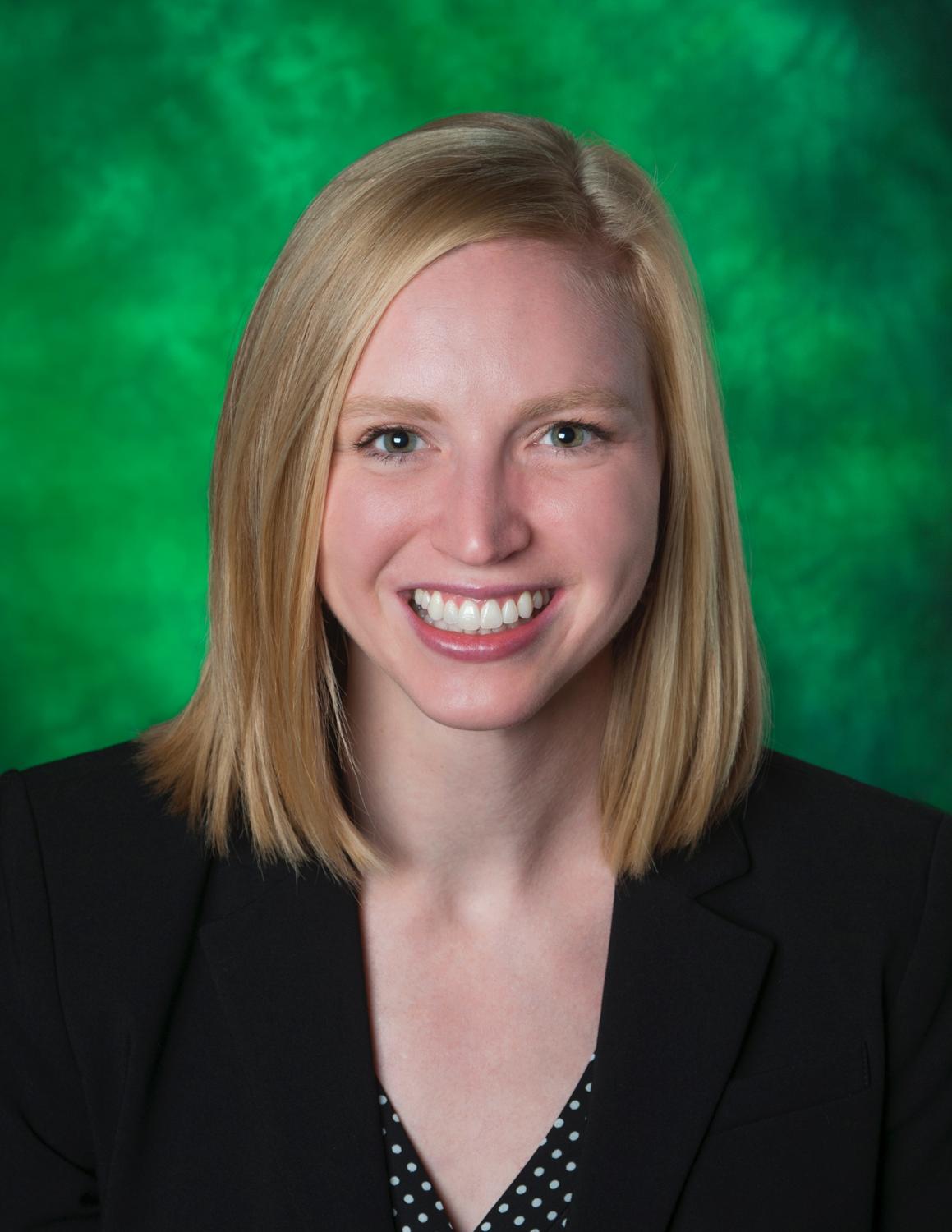
Graduate students are advised by department faculty. Sam Bergmann can help connect
you with potential faculty advisors based on your unique interests.
ABOUT US
Behavior Analysis is a natural science that studies the effects of the environment
on the behavior of individuals. Its principles are universal. They can be applied
with any population, including children with autism, people with developmental disabilities,
parents and children, pet owners, college students, healthcare providers, athletes,
employees, and CEOs.